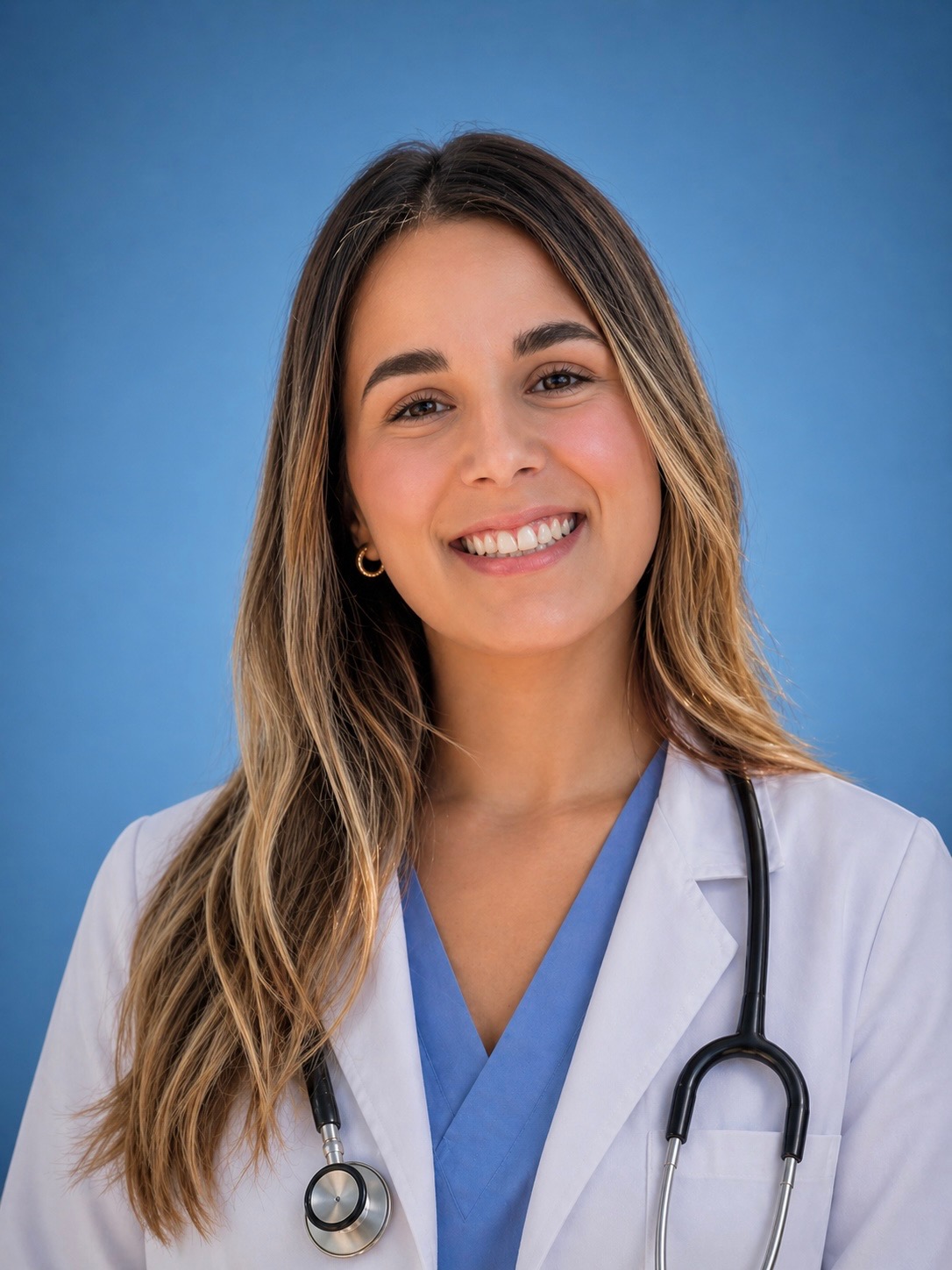
The first clinical rotation as an NP student is when the gap between what you know and what you do becomes impossible to ignore. You've studied. You've passed the exams. You've had your white coat ceremony. And now you're in front of a patient, and your preceptor is watching, and you have absolutely no idea what to say first.
That moment is universal. Every FNP you've ever respected has been there. Here's how to navigate it.
The first clinical is about learning the rhythm, not performing competence. Be a sponge, not a star.
Day One: What to Bring
- Stethoscope (clean it).
- Penlight, reflex hammer, tape measure.
- Pocket reference (Sanford guide or whatever your school recommends).
- Notebook for documentation templates and pearls.
- Snacks. You will not get a real lunch break the first two weeks.
- A pen that works.
How to Introduce Yourself
To preceptor: short, warm, specific. "Hi, I'm Chantal Rubio. I'm a nurse practitioner student from [school]. I have nine years of RN background, and I'm hoping to spend time on differential diagnosis this rotation. Thank you for having me."
To patient: "Hi, I'm Chantal. I'm a nurse practitioner student working with Dr. [preceptor's name] today. Is it okay if I see you first and then we'll bring her in together?" Most patients say yes. If they say no, smile and step out.
The First Encounter
You will freeze. Everyone freezes. Here's the framework I give my students for those first weeks.
- Greet the patient by name. Sit down. Make eye contact.
- Open-ended: "What brings you in today?"
- Let them talk for 60 to 90 seconds without interrupting. Almost every diagnosis is hidden somewhere in that monologue.
- Then ask focused follow-ups.
- Examine. Be thorough.
- Step out. Think. Build your differential.
- Present to your preceptor.
The Presentation
This is what intimidates students most. Here's the structure:
- One-sentence summary: "Mrs. Johnson is a 47-year-old woman presenting with three days of productive cough and fever."
- HPI in 4 to 6 sentences.
- Pertinent positives and negatives from review of systems.
- Relevant exam findings.
- Your differential — top 3.
- Your working diagnosis.
- Your plan: workup, treatment, follow-up.
You will stumble. Your preceptor will refine. That is the point.
Pearl: Always have an opinion. "I'm not sure" is okay; "I have no idea" is not. Even if your differential is wrong, you've shown you can think.
How to Be the Student Preceptors Love
- Show up early. Stay through the last patient if appropriate.
- Read on cases overnight. Bring questions in the morning.
- Take initiative. Ask if you can call back labs. Offer to write the note draft.
- Receive feedback without defensiveness. Even when it stings.
- Know your scope as a student. Don't promise things to patients that aren't yours to promise.
- Thank your preceptor sincerely at the end of every week.
How to Survive the Day
- Hydrate. Bring a water bottle and actually drink it.
- Pee when you can. Don't be the student who develops a UTI on her rotation because she didn't go.
- Eat breakfast. Even small.
- Pack a protein bar for between patients.
- Wear comfortable shoes. You are on your feet more than you think.
The Emotional Reality
You will go home some days feeling stupid. You will go home other days feeling like you can do anything. Both feelings are temporary. Both feelings are part of becoming.
The students who thrive are not the ones who are smartest at the start. They are the ones who keep showing up, keep asking questions, keep learning out loud, and don't let the bad days convince them they don't belong.
A Note on Difficult Preceptors
If you have a preceptor who is genuinely abusive — not just challenging — talk to your school. You should not have to learn under cruelty. Most preceptors are kind. The few who aren't should not become a barrier to your career.
What You'll Realize at the End
Somewhere around week six or eight, you'll notice you're not freezing anymore. The differential is forming on its own. You're asking better questions. You're presenting more crisply. The patients are responding to you as a clinician, not just a student.
That is the rotation working.
You are becoming.